0. Tam
Nothingness. Renewal and regeneration: the space where new cells and tissue form.
Ten elements, ten colours, and a map of the body on your fingers.
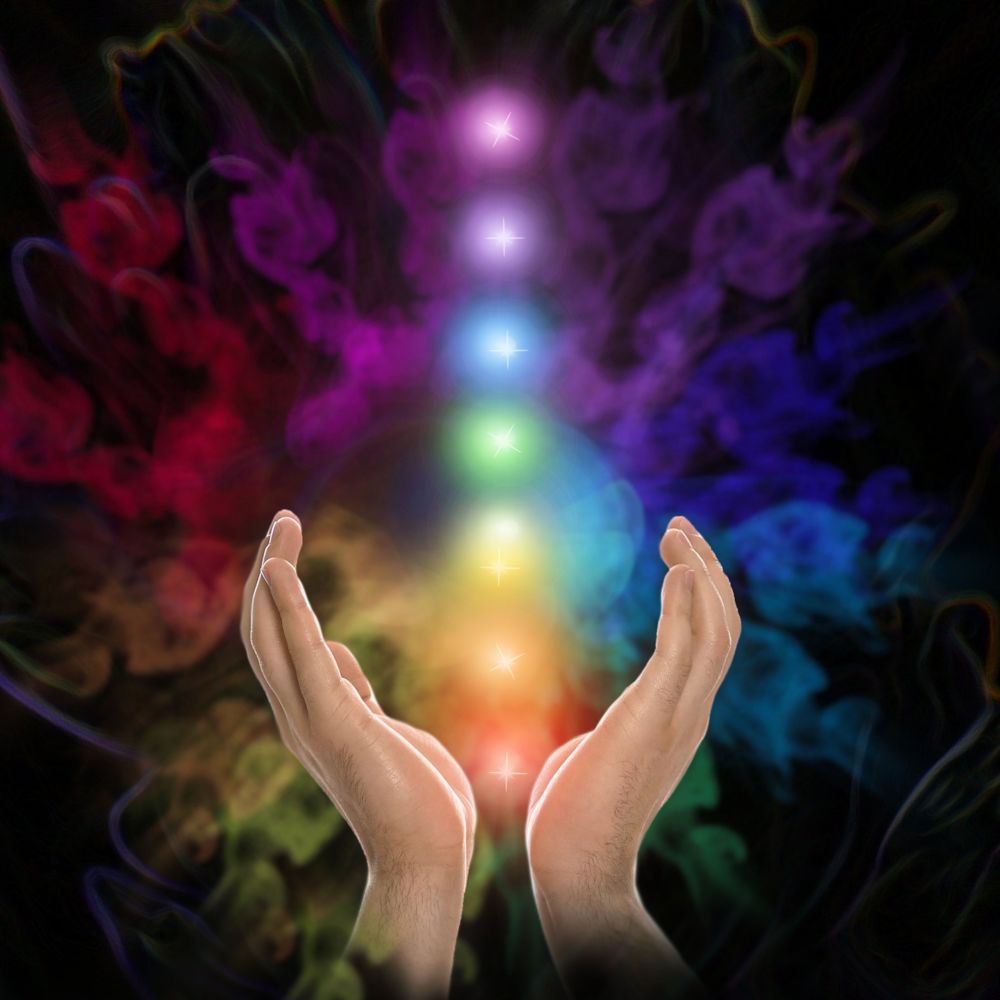
Heal With Colors borrows its structure from two long-standing healing traditions. Chinese acupuncture works with energy points and meridians. Ayurveda describes the body through the elements of space, wind, fire, water and earth.
Here, those elements are grouped into ten: five physical and five metaphysical. Each one has a place on a finger or thumb and a colour of its own.
Akash (space), Vayu (wind), Agni (fire), Jal (water), Prithvi (earth).
Kaal (time), Disha (direction), Mann (mind), Aatma (soul), Tam (nothingness).
Enhance means to stimulate an element. Tranquilize means to calm or reduce it, and uses the next colour in the list.
| # | Element | Location | Enhance | Tranquilize |
|---|---|---|---|---|
| 0 | Tam (Nothingness) | Right thumb | Black | White |
| 1 | Akash (Space) | Right little finger | Violet | Indigo |
| 2 | Vayu (Wind) | Left little finger | Indigo | Sky blue |
| 3 | Agni (Fire) | Left index finger | Sky blue | Green |
| 4 | Jal (Water) | Right index finger | Green | Yellow |
| 5 | Prithvi (Earth) | Right ring finger | Yellow | Orange |
| 6 | Kaal (Time) | Left ring finger | Orange | Red |
| 7 | Disha (Direction) | Left middle finger | Red | Pink |
| 8 | Mann (Mind) | Right middle finger | Pink | Violet |
| 9 | Aatma (Soul) | Left thumb | White | Black |
Colour names are guides. Purple for violet, dark blue for indigo, sky blue for light blue, and ordinary pink, white and black.
Nothingness. Renewal and regeneration: the space where new cells and tissue form.
Space. Flexibility, softness and openness, in the body and in attitude.
Wind. Movement, lightness and clarity. Quick to start, quick to tire.
Fire. Warmth, digestion and discernment. The element of transformation.
Water. Flow, moisture and connection. Calm, cooling and relational.
Earth. Stability, strength and support. Slow, steady and dependable.
Time. Timing and sensitivity: sleep, meals, cycles and the senses.
Direction. Sense of direction and orientation, in the body and in communication.
Mind. The mind and emotions. Linked with pink, the colour of love and care.
Soul. The vital energy that underlies every other element.
A small map of the whole body is said to sit on each finger and toe. The top section corresponds to the head and neck, the middle to the chest, and the bottom to the abdomen.
The palm side (yin) holds the front of the body and its organs. The back of the hand (yang, the side with the nails) holds the spine and kidneys. You choose the area that matches where you feel discomfort.
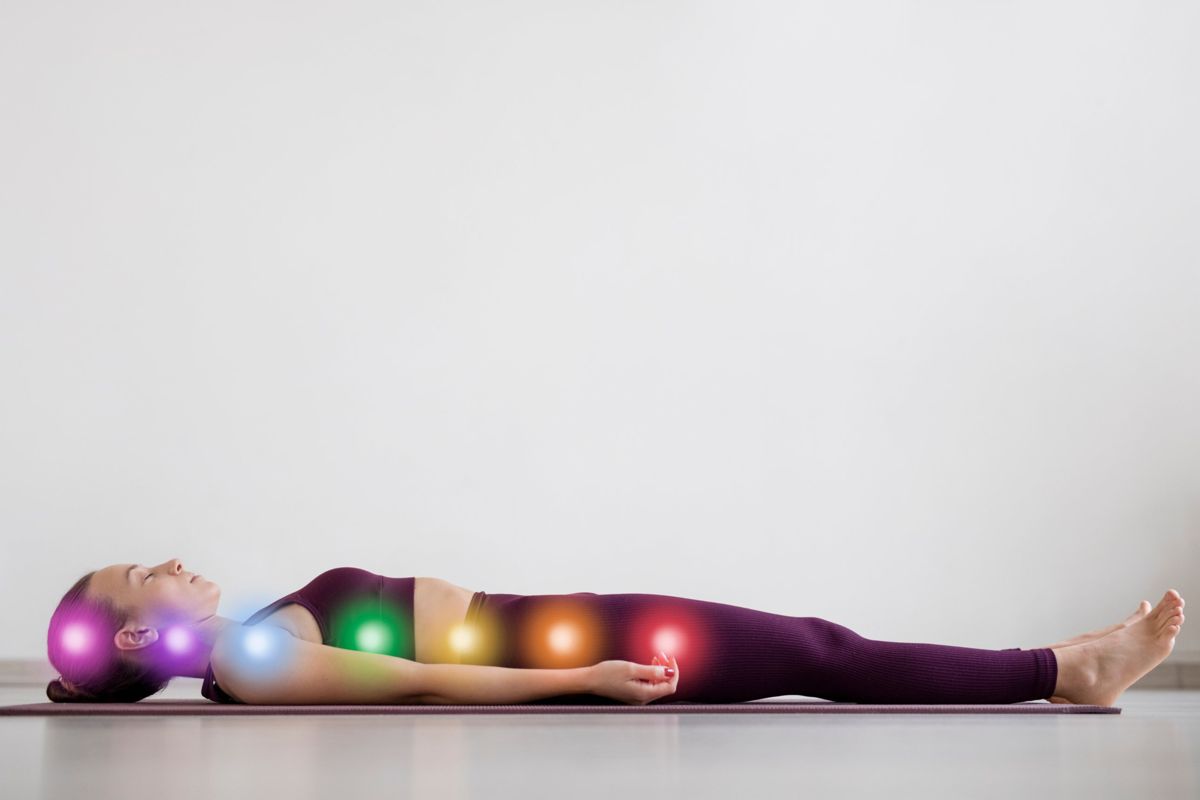
Sunlight splits into the rainbow when it passes through a prism, and every colour sits within white light. Researchers study how light affects mood and the body; bright white light, for example, is an established treatment for seasonal low mood. Heal With Colors takes inspiration from this, but its method of applying colour to finger points is a traditional practice rather than an established medical therapy.
Each element has two colours. Use its own colour to enhance it, which means to stimulate it. Use the next colour in the list to tranquilize it, which means to calm it.
For example, Prithvi (earth) is enhanced with yellow and tranquilized with orange. Disha (direction) is enhanced with red and tranquilized with pink.
A guide written as ↑5 ↓7 means: yellow on Prithvi to enhance, pink on Disha to tranquilize.
A worked example. Someone has knee ache. We ask them to point to where it feels sore, find the matching knee point on the finger map, explain what we are doing, add the chosen colours, then ask how they feel. Talking it through first helps people stay relaxed and engaged.
We want you to know what is established and what is not.
A review of 132 studies found consistent links between colours and emotions across cultures. This is about association, not treatment.
Bright light therapy is an established treatment for seasonal affective disorder. It is a clinical treatment and different from colouring points on the fingers.
Reviews find limited scientific evidence that colour therapy treats physical or mental conditions. It is generally considered safe, and it is not a substitute for medical care.
The ten-element system and the body semblance come from Indian traditional practice and our own experience. They have not been tested in clinical trials.
The seven-colour chakra model took its present form in the twentieth century, which is why we describe it as a guide and not as ancient fact.
We offer colour practice for relaxation, focus and self-care, and we ask everyone to keep seeing their doctor for health concerns.
Further reading: Kurt Leland, Rainbow Body: A History of the Western Chakra System (2016). Jonauskaite and Mohr, a 2025 review of colour and emotion in Psychonomic Bulletin & Review. The UK Therapy Directory guide to colour therapy.
A map of the whole body that is said to sit on each finger and toe.
The palm side, which holds the front of the body and organs.
The back of the hand, with the nails, which holds the spine and kidneys.
To stimulate an element with its own colour.
To calm an element with the next colour in the list.
A finger segment: top for head and neck, middle for chest, bottom for abdomen.
Message us on WhatsApp or send an enquiry. We will help you choose a session or workshop.
