Root chakra
Muladhara · Red · Base of the spine
Themes: Safety, grounding, belonging.
When it feels balanced: Steady and secure.
When it feels out of balance: Anxious, unsettled, ungrounded.
Seed sound: LAM
Seven energy centres along the spine, each linked with a colour, a part of life and a way to rest and reset.
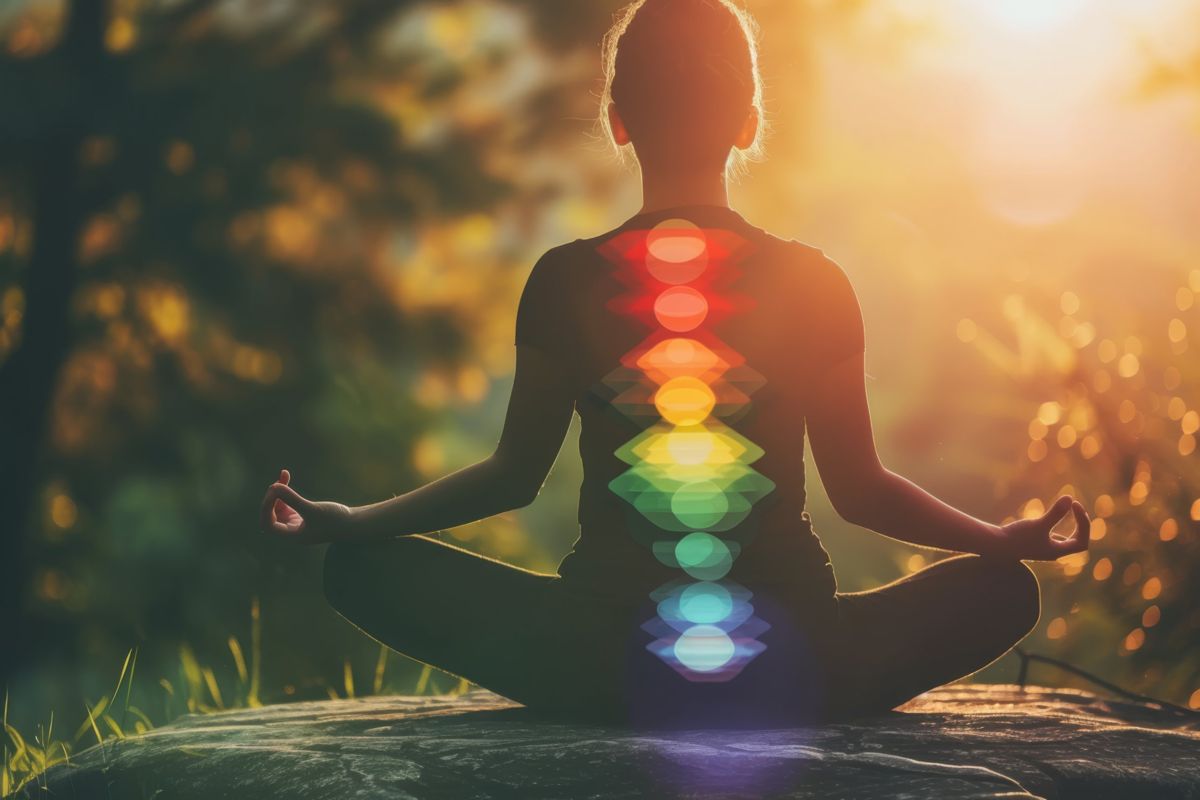
In yogic and Indian spiritual traditions, chakras are seven energy centres that run from the base of the spine to the crown of the head. Each is linked with a colour and with themes such as safety, creativity, confidence, love, expression, intuition and awareness.
Chakras are a symbolic map, not an anatomical structure. People use that map to reflect on how they feel and to guide calming practices such as colour visualisation, breathing and sound.
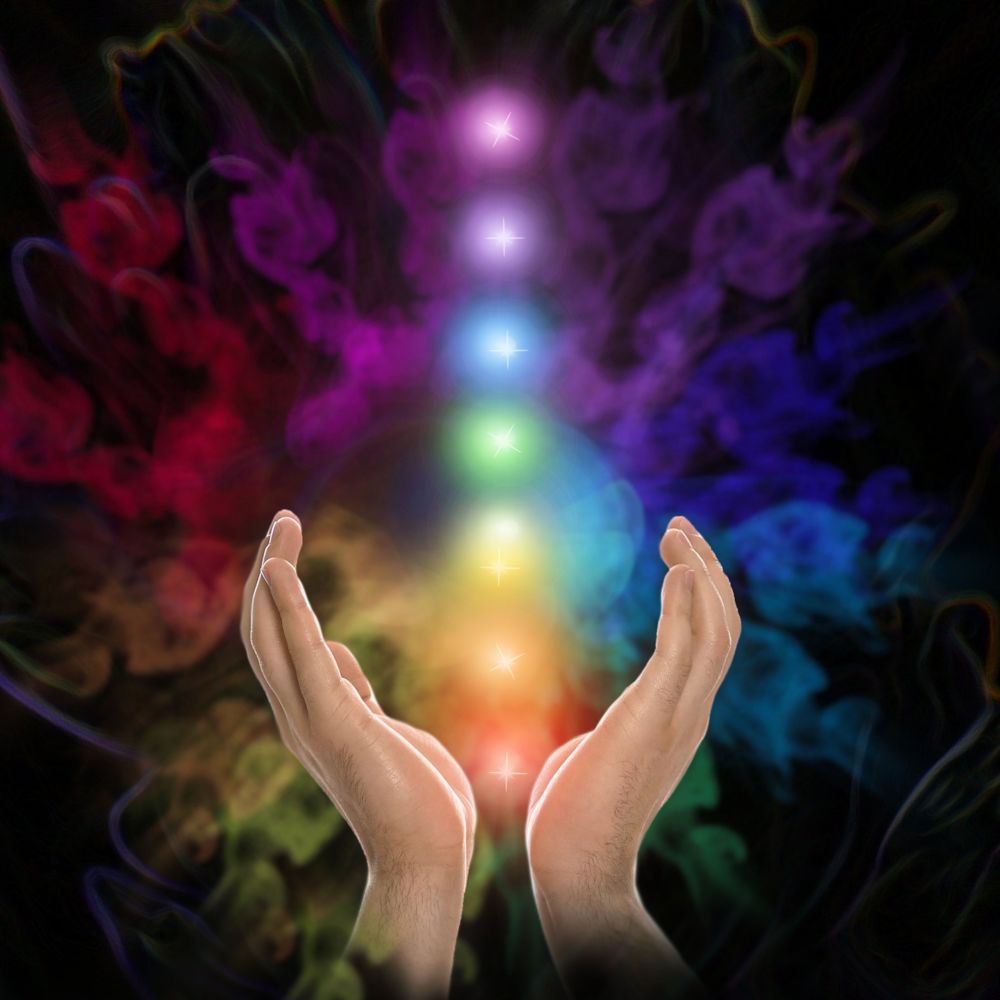
From the base of the spine upward. These descriptions come from tradition and are meant for reflection.
Muladhara · Red · Base of the spine
Themes: Safety, grounding, belonging.
When it feels balanced: Steady and secure.
When it feels out of balance: Anxious, unsettled, ungrounded.
Seed sound: LAM
Svadhisthana · Orange · Lower abdomen
Themes: Creativity, emotion, pleasure.
When it feels balanced: Open, creative, flowing.
When it feels out of balance: Numb, stuck or overwhelmed by feelings.
Seed sound: VAM
Manipura · Yellow · Upper abdomen
Themes: Confidence, will, personal power.
When it feels balanced: Motivated and self-assured.
When it feels out of balance: Self-doubt, indecision or overcontrol.
Seed sound: RAM
Anahata · Green · Centre of the chest
Themes: Love, compassion, connection.
When it feels balanced: Warm, forgiving, connected.
When it feels out of balance: Closed off, lonely or resentful.
Seed sound: YAM
Vishuddha · Blue · Throat
Themes: Expression, truth, listening.
When it feels balanced: Clear and honest.
When it feels out of balance: Holding back words, or speaking without listening.
Seed sound: HAM
Ajna · Indigo · Between the brows
Themes: Intuition, insight, imagination.
When it feels balanced: Clear-minded and perceptive.
When it feels out of balance: Foggy, overthinking or disconnected from intuition.
Seed sound: OM
Sahasrara · Violet · Top of the head
Themes: Awareness, meaning, stillness.
When it feels balanced: Peaceful and open.
When it feels out of balance: Restless, cynical or cut off from meaning.
Seed sound: Silence
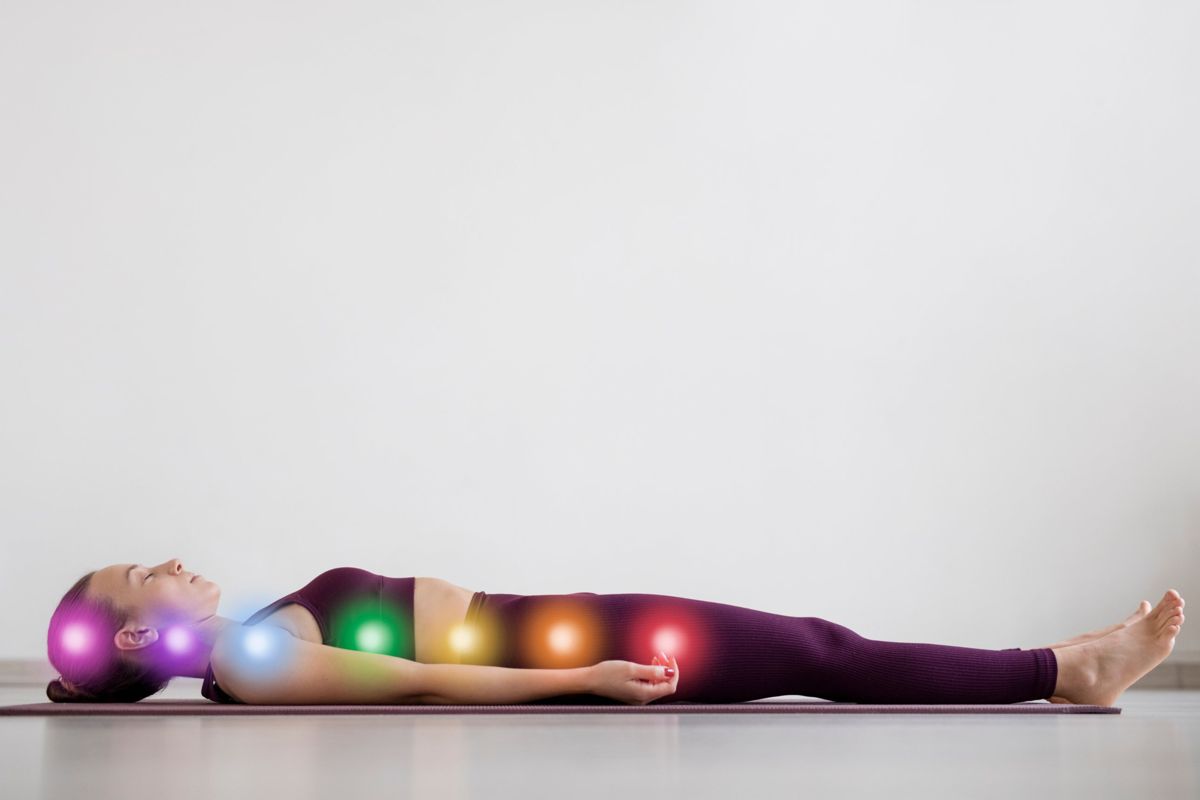
A gentle note. Heal With Colors offers colour therapy and chakra healing as complementary wellness practices rooted in tradition. They are not medical treatments and have not been shown by clinical trials to diagnose, treat or cure any condition. Please see a qualified doctor for any health concern, and never stop or delay medical care because of what you read here.
The word chakra means wheel in Sanskrit. Chakras appear in Hindu and Buddhist tantric traditions as points of focus in meditation and yoga. Different traditions describe different numbers, usually between four and seven, and the early texts place them in various ways.
The familiar seven-chakra system with a rainbow of colours is more recent. A British scholar, John Woodroffe, writing as Arthur Avalon, introduced tantric chakra ideas to English readers in 1919. The spectrum colours were attached to the chakras later in the twentieth century, and the rainbow model became popular by the 1970s.
We share this because it matters. We use the seven-colour model as a clear, familiar guide for relaxation and reflection, not as a claim about ancient anatomy.
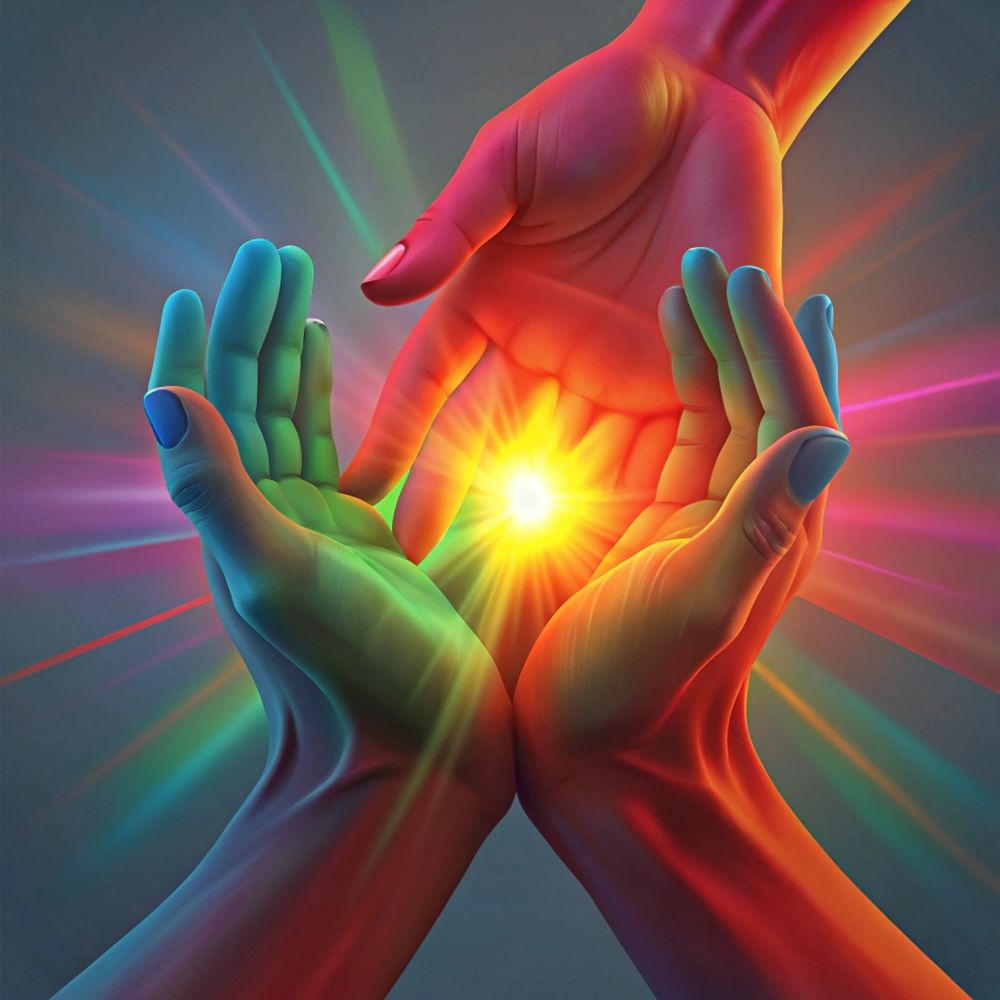
Gentle ideas to try. Choose one chakra, spend a few minutes, and notice how you feel.
| Chakra | Movement | Breath or sound | Affirmation | In daily life |
|---|---|---|---|---|
| Root | Mountain pose or a deep squat | Breathe into the belly; hum low | I am safe and supported. | Walk barefoot on earth; wear or look at red |
| Sacral | Hip circles, goddess pose | Slow breath into the lower belly | I welcome change and enjoyment. | Time near water; creative play; orange fruit |
| Solar plexus | Boat pose, gentle sun salutations | Brisk belly breathing, then rest | I trust my choices. | Morning sunlight; set one small clear goal |
| Heart | Cobra, camel or a gentle backbend | Breathe into the chest, long exhale | I give and receive love. | Time among plants; a kind note to someone |
| Throat | Fish pose, neck and shoulder rolls | Humming, singing or chanting | I speak honestly and kindly. | Sing; write in a journal; listen fully to someone |
| Third eye | Child's pose, seated forward fold | Slow, quiet breathing with eyes closed | I listen to my inner voice. | Dim lights in the evening; ten quiet minutes |
| Crown | Seated meditation or rest pose | Silent sitting, soft breath | I am at peace. | Stillness; gratitude; time under open sky |
Skip any movement that hurts, and ask a teacher or doctor first if you have an injury or health condition.
No structure has been found in the body that matches a chakra. They are a symbolic map used in meditation and yoga, and many people find the map useful for reflection.
No. There is no clinical evidence that chakra work treats illness. Slow breathing, relaxation and quiet attention are well known to help people feel calmer, and that is what our sessions aim for.
We talk, settle the breath, and guide your attention through the chakras with colour. You stay fully clothed and may sit or lie down. It is gentle and you can stop at any time.
Comfortable clothing and a water bottle. We supply the rest.
There is no rule. Some people like a short daily practice, others a session now and then.
Yes, as a relaxation practice alongside your doctor's care. Please keep taking any prescribed treatment.
Message us on WhatsApp or send an enquiry. We will help you choose a session or workshop.
